



There is a particular kind of hope that arrives the moment you decide you want to have a baby. It is quiet and enormous at the same time. Suddenly the calendar on your phone looks different. Your body feels like a country you thought you knew well but have never really mapped. And the questions begin to multiply: When exactly do I ovulate? How do I know if I missed my window? Is something wrong if it hasn’t happened yet? Am I doing this right?
If any of that sounds familiar, take a breath. You are not behind, you are not broken, and you are absolutely not alone. Trying to conceive is one of the most common journeys in the world, and yet almost no one teaches us how our cycles actually work until we suddenly, desperately need to know. The good news is that the science of ovulation tracking has never been more accessible, more accurate, or more empowering than it is in 2026. With a little knowledge and the right tools, you can turn that anxious guesswork into something that feels a lot more like a plan.
This guide is a long, warm, deeply practical walk through everything that matters when you are trying to conceive: how your cycle really works, why ovulation timing is the single most important variable in the whole equation, the handful of fertile days that actually count, the signs your body gives you, the tracking methods worth your time, how modern AI-powered apps predict ovulation with surprising precision, the lifestyle habits that genuinely move the needle, and when it makes sense to bring a doctor into the conversation. By the end, you’ll understand your fertility better than most people ever do — and you’ll have a clear, confident way forward.
Let’s begin.
A woman checking a cycle calendar on her phone, hopeful
Why Ovulation Timing Matters More Than Anything Else
Here is the single most important fact in this entire guide, and if you take nothing else away, take this: you can only get pregnant during a short window around ovulation. Not all month. Not most of the month. A window of roughly six days, and realistically the two or three days at the heart of that window are where the magic concentrates.
This surprises a lot of people. We grow up with the vague impression that fertility is a constant background hum, that you could conceive more or less any time you have unprotected sex. The truth is far more specific. An egg, once released, survives only about 12 to 24 hours. If it isn’t fertilized in that brief span, it quietly dissolves and the opportunity passes until the next cycle. That’s it. One egg, one day, once a month.
So why isn’t the fertile window just a single day? Because of the other half of the equation: sperm. Healthy sperm can survive inside the supportive environment of the female reproductive tract for up to five days when fertile cervical mucus is present. This means that intercourse a few days before ovulation can still result in pregnancy, because the sperm are essentially waiting in position for the egg to arrive. Combine sperm’s five-day survival with the egg’s one-day lifespan and you get that famous “six-day fertile window” — the five days leading up to ovulation plus ovulation day itself.
Now picture two couples, equally healthy, equally eager. One couple has intercourse twice during that fertile window. The other couple, working off a guess or a misunderstanding of when ovulation happens, times everything for a week too early or too late. The first couple has a meaningful chance of conceiving this cycle. The second couple, despite doing everything else right and trying just as hard, has almost no chance at all — not because of any medical problem, but purely because of timing.
That is why ovulation timing matters more than anything else. It is the difference between trying and trying effectively. A huge portion of the couples who worry they have a fertility problem are simply missing their window, month after month, often by just a few days. Learning to identify ovulation accurately is the highest-leverage thing you can do, and it costs you nothing but a little attention.
The Cycle and the Hormones Behind It
To track ovulation well, you need a working mental model of what’s actually happening inside your body across a month. Don’t worry — you don’t need a biology degree. You just need to understand the rhythm.
A menstrual cycle is counted from the first day of your period (day one of real bleeding, not spotting) to the day before your next period begins. The textbook cycle is 28 days, but anywhere from about 21 to 35 days is considered normal, and your own number is allowed to vary a little from month to month. What matters is the choreography of four key hormones moving in sequence.
The Follicular Phase and Rising Estrogen
The first half of your cycle, starting on the day your period arrives, is called the follicular phase. During this stage, your brain releases follicle-stimulating hormone (FSH), which nudges a cluster of tiny fluid-filled sacs in your ovaries — follicles — to start maturing. Usually one follicle becomes dominant and races ahead of the others, growing an egg inside it.
As that dominant follicle grows, it produces increasing amounts of estrogen. Estrogen is the architect of the first half of your cycle. It thickens the lining of your uterus into a soft, nourishing bed in case an embryo needs somewhere to implant. It also transforms your cervical mucus, shifting it from scant and sticky to the slippery, stretchy, egg-white texture that helps sperm swim upward and survive. Rising estrogen is, in a very real sense, your body preparing the runway.
The LH Surge and Ovulation
When estrogen climbs high enough and stays elevated for long enough, it flips a switch in the brain. The pituitary gland responds by releasing a sudden, dramatic burst of luteinizing hormone (LH) — the famous LH surge. This surge is the starting gun. Roughly 24 to 36 hours after LH peaks, the mature follicle ruptures and releases its egg. That release is ovulation.
This is precisely why ovulation predictor kits work: they detect the LH surge in your urine, giving you a heads-up that ovulation is coming within a day or two. The LH surge is the most reliable real-time signal that your fertile window is wide open right now.
The Luteal Phase and Progesterone
After ovulation, the now-empty follicle transforms into a temporary structure called the corpus luteum, which begins pumping out progesterone. This is the second half of your cycle, the luteal phase. Progesterone’s job is to maintain that plush uterine lining and keep it welcoming for a potential pregnancy. It also raises your basal body temperature slightly — a clue we’ll use later for tracking.
If the egg is fertilized and implants, it signals the body to keep producing progesterone, the lining stays put, and your period doesn’t come. If no pregnancy occurs, the corpus luteum breaks down after about 12 to 14 days, progesterone falls, the lining sheds, and your period begins. The cycle starts over.
One beautiful, useful fact lives inside this design: the luteal phase is remarkably consistent in length, almost always around 14 days (give or take a day or two) for a given woman. The follicular phase, by contrast, is where most of the variation happens. This is the secret that makes ovulation prediction possible — it’s why counting backward from your expected period can estimate ovulation even when cycle length varies.
The Fertile Window: The Six Days That Actually Matter
Let’s make the fertile window concrete, because this is the heart of conception.
Your fertile window spans the five days before ovulation, plus ovulation day itself — six days total. But these six days are not created equal. The probability of conceiving climbs steadily as you approach ovulation, peaks in the two days right before and including the day of ovulation, and then drops off sharply once the egg has come and gone.
Here’s a simple way to picture the relative odds across the window:
- Five days before ovulation:low chance, but real (those patient, long-living sperm).
- Four days before:a little higher.
- Three days before:
- Two days before ovulation:one of the two best days. This is prime time.
- The day before ovulation:often the single highest-probability day, because sperm are already in position when the egg arrives.
- Ovulation day:still excellent, though the egg’s clock is now ticking.
- The day after ovulation:the window has essentially closed; the egg is no longer viable.
Notice what this tells us about strategy. The biggest mistake couples make is waiting until they’re certain ovulation has happened and then having intercourse. By then it’s frequently too late. The optimal approach is to be active during the days leading up to ovulation, so that sperm are already waiting when the egg is released. You want to be early, not late.
This is also why apps and tracking methods that only confirm ovulation after it happens — like basal body temperature alone — are useful for understanding your pattern but limited for timing in the current cycle. The most powerful approach combines a predictive signal (so you know the window is approaching) with a confirming signal (so you know ovulation actually occurred).
The Signs of Ovulation Your Body Is Already Giving You
Your body is not silent about ovulation. It broadcasts a whole set of signals, and once you learn to read them, you’ll be amazed you ever missed them. Here are the big three, plus a few honorable mentions.
1. Basal Body Temperature (BBT)
Your basal body temperature is your body’s temperature fully at rest, taken first thing in the morning before you so much as sit up. Throughout the follicular phase, it sits in a lower range. After ovulation, that surge of progesterone nudges it up by about 0.3 to 0.5 degrees Celsius (roughly half a degree to a full degree Fahrenheit), and it stays elevated through the luteal phase until your period.
When you chart BBT day after day, you see a clear two-level pattern: lower temps before ovulation, a small sustained jump after. That jump confirms ovulation happened.
The honest limitation: BBT confirms ovulation only after the fact. By the time you see the rise, you’ve already ovulated, and the most fertile days are behind you. So BBT is fantastic for understanding your personal pattern over a few cycles — which then helps predict future windows — but it’s not great for catching this month’s window in real time. For accuracy, you need to measure at the same time each morning after at least three hours of sleep, before any activity, because eating, moving, alcohol, illness, or poor sleep can all throw the number off.
2. Cervical Mucus
This is the most underrated and arguably most useful real-time sign, and it’s completely free. As estrogen rises toward ovulation, your cervical mucus changes in a very predictable way:
- Right after your period: dry or very little mucus.
- Early follicular: sticky, tacky, cloudy, scant.
- Approaching ovulation: creamy, lotion-like, increasing in amount.
- Peak fertility: clear, slippery, stretchy — exactly like raw egg white. You can stretch it an inch or more between two fingers. This “egg-white cervical mucus” is the gold-standard sign that you are in your most fertile days.
- After ovulation: it dries up quickly, becoming sticky or absent again as progesterone takes over.
The egg-white stage is your body literally rolling out the welcome mat for sperm — the mucus is designed in this phase to nourish them and help them travel. When you see it, your fertile window is wide open. The beauty of cervical mucus is that, unlike BBT, it predicts ovulation before it happens, giving you actionable lead time.
3. LH / Ovulation Predictor Kits (OPKs)
Ovulation predictor kits are urine tests, much like a pregnancy test, that detect the LH surge. When the test line is as dark as or darker than the control line, your LH has surged and ovulation is likely within the next 12 to 36 hours. That’s your green light: the next two days are your best two days.
OPKs are popular because they take the interpretation out of your hands and give a clear yes/no. Digital versions remove even the squinting-at-faint-lines problem. They work brilliantly for most women. The two caveats: women with PCOS can have chronically elevated LH that produces confusing results, and you need to test at the right time of day (early afternoon is often recommended) and not over-dilute by drinking gallons of water first.
Honorable Mentions
Other ovulation clues include mittelschmerz — a mild one-sided twinge or ache in the lower abdomen as the follicle ruptures; a heightened libido around your fertile days (your body is not subtle); slightly tender breasts; mild bloating; and for some, a noticeable shift in energy or mood. A softer, higher, more open cervix is another sign for those comfortable checking. No single sign is perfect, which is exactly why combining several gives you a far clearer picture than relying on any one alone.
Ovulation tracking essentials: thermometer, calendar and app on a desk
Tracking Methods Compared: Finding What Works for You
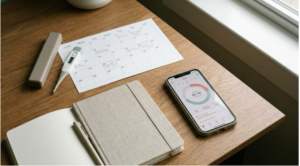
There’s no single “best” method for everyone — there’s the best method for your body, your schedule, and your patience level. Here’s an honest comparison of the main approaches.
The Calendar / Calendar-Counting Method
This is the old-school approach: track your cycle lengths for several months, then estimate ovulation as roughly 14 days before your next expected period. If you have a textbook 28-day cycle, that puts ovulation around day 14.
Pros: Free, simple, no equipment. A reasonable starting estimate. Cons: Assumes regularity. If your cycles vary even a little, the calendar can be off by days — and days matter enormously here. On its own, calendar counting is the least reliable method for actually pinpointing ovulation. It’s best used as a foundation that other signals refine.
Basal Body Temperature Charting
Take your temperature every morning and plot it.
Pros: Free (just a sensitive thermometer), confirms ovulation actually happened, reveals your luteal phase length, and over a few cycles builds a personal pattern. Cons: Confirms after the fact, demands rigid consistency, and is easily disrupted by sleep, illness, alcohol, or travel.
Cervical Mucus Monitoring
Observe and record your mucus changes daily.
Pros: Free, predicts ovulation before it happens, deeply attuned to your own body. Cons: Requires a learning curve, can feel subjective at first, and can be muddied by semen, lubricants, infections, or certain medications.
Ovulation Predictor Kits
Test your urine for the LH surge.
Pros: Clear, objective, predicts ovulation 12–36 hours ahead, easy to interpret (especially digital). Cons: Ongoing cost (the tests add up), can be unreliable with PCOS, and requires testing at the right time.
Fertility Monitors and Wearables
Devices and wearable rings or patches that track temperature, heart rate, and other biomarkers continuously through the night.
Pros: Hands-off, continuous data, often more robust than a single morning temperature reading. Cons: Upfront cost, and you still need software to interpret the data meaningfully.
The Symptothermal Approach (Combining Methods)
This is what fertility experts generally consider the gold standard: combine multiple signs — typically cervical mucus (to predict) plus BBT (to confirm), often with OPKs layered in. When two or three independent signals agree, your confidence skyrockets.
Pros: The most accurate, most resilient approach. One signal covers another’s blind spot. Cons: It’s a lot to juggle by hand — recording, charting, cross-referencing, and interpreting daily across a noisy month of data.
And that last “con” is exactly where modern technology has changed the game.
How AI Cycle Apps Predict Ovulation
For most of human history, the symptothermal method meant paper charts, colored pens, and a fair amount of squinting. Today, an AI-powered cycle app does the heavy lifting for you — and does it better than manual charting ever could, because it can see patterns across months of your data that a human eye would miss.
Here’s what’s actually happening under the hood of a good AI cycle app in 2026:
It learns your cycle, not the textbook’s. Early apps just assumed a 28-day cycle and ovulation on day 14 for everyone — which is wrong for the majority of real women. Modern AI models ingest your unique cycle history: your average length, your variability, your luteal phase, your logged symptoms. Each cycle you log makes the prediction sharper. After a few months, the app understands your particular rhythm rather than a generic average.
It fuses multiple data streams. Instead of relying on one signal, AI apps combine logged period dates, BBT, cervical mucus observations, OPK results, symptoms, and even wearable data into a single probabilistic prediction of your fertile window. This is the symptothermal method, automated and supercharged.
It quantifies uncertainty. Rather than declaring a single “ovulation day” with false confidence, a sophisticated app shows you a fertile window with probability — the days most likely to count, and how sure it is. This is honest and more useful, because biology is probabilistic, not clockwork.
It adapts in real time. Logged a positive OPK earlier than expected? A good app updates your predicted window immediately. Noticed egg-white mucus? It factors that in. The prediction is a living thing, not a static guess made at the start of the month.
This is where a well-designed, privacy-respecting app becomes genuinely transformative for couples trying to conceive — and it’s why so many women now build their TTC routine around one. If you’re shopping for one, it pays to choose carefully, because you’ll be entrusting it with some of the most intimate data you have. A thoughtful starting point is a resource like vyvecare, which focuses on cycle health and the kind of AI-driven tracking that actually helps with conception rather than just logging dates.
A Closer Look at Vyve for Trying to Conceive
Among the new generation of intelligent cycle apps, Vyve has earned a real following with women who are trying to conceive — and it’s worth understanding why, because it illustrates what “good” looks like in this category.
What sets Vyve apart for TTC isn’t a single flashy feature but the way several thoughtful pieces work together:
- AI ovulation and fertile-window predictions.Rather than treating you like the statistical average, Vyve’s models learn your individual cycle over time and predict your fertile window with increasing precision, flagging the specific days where your odds peak. It blends your cycle history, logged symptoms, temperature, and test results into one clear, probability-aware forecast — exactly the kind of multi-signal approach experts recommend, done automatically.
- An AI Cycle Coach.This is the feature women tend to fall in love with. Instead of leaving you to interpret a chart alone at 6 a.m., the AI Cycle Coach acts like a knowledgeable, calm companion in your pocket — explaining what your data means, answering the anxious 2 a.m. questions (“Was that twinge ovulation?”), and nudging you toward the best-timed days. For something as emotionally loaded as trying to conceive, having an intelligent, judgment-free guide makes an enormous difference.
- Cycle-synced Food and Nutrition.Vyve connects the dots between your hormones and your plate. As your cycle moves through its phases, the app suggests nutrition aligned with what your body is doing — iron-forward foods after your period, fertility-supportive nutrients as you approach ovulation, and so on. Nutrition genuinely matters for conception, and having it synced to your cycle turns a vague “eat healthy” into something specific and actionable.
- Rich symptom tracking.Cervical mucus, BBT, mood, energy, cramps, libido, OPK results — the more you log, the smarter the predictions get, and the clearer your personal pattern becomes. Vyve makes this quick rather than tedious.
- Privacy-first design.This deserves real emphasis. Your reproductive data is among the most sensitive information about you, and in 2026 women are rightly cautious about where it lives. Vyve is built privacy-first, treating your cycle and fertility data as yours — not as a product to be sold. For anyone tracking conception, that peace of mind isn’t a nice-to-have; it’s foundational.
If you want to try it, Vyve is available as a Period Tracker App on the App Store, and it’s designed so that the same intelligence that helps you understand your cycle day to day is the same intelligence helping you time conception. Many women start with it casually as a Period Tracker App and then discover its fertility features become the centerpiece of their TTC routine. You don’t have to take my word that an app like this helps — but the logic is straightforward: better data, better timing, better odds.
Of course, no single app is the universe, and part of being a savvy TTC person in 2026 is reading widely. Independent, education-first resources such as best period tracker are great for comparing approaches, deepening your understanding of cycle health, and making sure the tool you pick genuinely fits your body and your goals.
Timing Intercourse: Putting It All Together
You understand the window. You can read the signs. You’ve got a tool helping you predict. Now, how do you actually time things?
The research here is reassuringly clear and refreshingly low-pressure.
Frequency that works: Having intercourse every one to two days throughout your fertile window gives you the best chance, without the burnout. Some couples obsess over “saving up,” but daily or every-other-day intercourse across the fertile window slightly outperforms infrequent, perfectly-timed single attempts — and it removes the crushing pressure of having to nail one exact day.
Start before ovulation, not after. Because sperm wait better than eggs, the smart play is to be active in the lead-up. If your app or signs say ovulation is coming in two or three days, that’s your cue to get going, not a reason to wait. Aim for intercourse on the two days before your predicted ovulation and on ovulation day itself, at minimum.
Don’t let it become a chore. This is genuinely important, not a throwaway line. The pressure of “scheduled” conception sex can drain intimacy and add stress — and stress is the opposite of helpful. Try to keep connection, affection, and a little playfulness in the picture. You’re not running a fertility drill; you’re trying to make a baby with someone you love.
Forget the myths. You don’t need to stand on your head afterward. You don’t need special positions. Lying down for a few minutes afterward is fine and harmless, but the data doesn’t support elaborate post-coital gymnastics. Healthy sperm reach the destination quickly. Likewise, normal lubricants can sometimes hinder sperm — if you need lubrication, choose a fertility-friendly one and skip the regular kind during your fertile days.
Both partners matter. Conception is a team sport. Sperm health is half the equation, and it’s affected by heat (skip the hot tubs and laptop-on-lap habits during TTC), smoking, excessive alcohol, and overall health. If you’ve been trying for a while, a simple semen analysis is one of the easiest, highest-value tests a couple can do — and it’s often overlooked because the cultural script wrongly puts all the focus on the woman’s body.
Lifestyle Factors That Genuinely Support Fertility
Timing gets the egg and sperm in the same place at the right moment. But the quality of that egg, that sperm, and that uterine environment is shaped over the months beforehand by how you live. Eggs take roughly 90 days to mature before ovulation, so the lifestyle choices you make now are an investment in the cycles a few months out. Here’s what the evidence actually supports.
Nutrition
You don’t need a perfect, restrictive “fertility diet” — you need a genuinely nourishing one. The pattern that consistently shows up in fertility research looks a lot like a Mediterranean way of eating: plenty of vegetables and fruit, whole grains, legumes, healthy fats like olive oil and avocado, nuts and seeds, fish, and moderate amounts of quality protein, while minimizing ultra-processed foods, added sugars, and trans fats.
A few specifics worth highlighting:
- Folate (folic acid):Crucial before and in early pregnancy to reduce neural tube defects. Most experts recommend starting a prenatal vitamin with folate before you conceive, not after the positive test.
- Iron and plant proteins:Diets richer in iron and plant-based protein (beans, lentils, nuts) are associated with better ovulatory function.
- Healthy fats and omega-3s:Support hormone production and egg quality.
- Antioxidant-rich colorful produce:Helps protect egg and sperm from oxidative stress.
- Steady blood sugar:Whole, fiber-rich carbohydrates over refined ones supports the hormonal balance ovulation depends on — especially important for women with PCOS.
This is exactly the philosophy behind cycle-synced nutrition features in modern apps: instead of generic advice, you get suggestions that match what your hormones are doing this week.
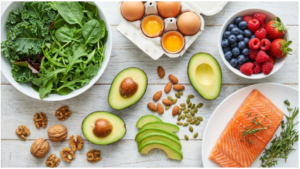
Fresh healthy fertility-supporting foods
Sleep
Sleep is the unsung hero of fertility. Your reproductive hormones are regulated by the same brain systems that govern your sleep-wake cycle, and chronic sleep deprivation or erratic schedules can disrupt ovulation. Aim for seven to nine hours of consistent, quality sleep. Protect a regular bedtime, dim the screens before bed, and treat sleep not as a luxury but as part of your conception strategy. Shift workers and night-owls trying to conceive especially benefit from stabilizing their sleep rhythm where possible.
Stress
Let’s be honest and gentle about this one, because “just relax” is the most infuriating advice a person trying to conceive can hear. Stress alone is rarely the reason a healthy couple isn’t conceiving, and no one should be made to feel that their anxiety is sabotaging their family. At the same time, chronic, grinding stress can affect cycle regularity and ovulation timing through the hormonal axis that connects your brain to your ovaries. The goal isn’t to achieve some impossible zen state — it’s to build small, sustainable practices that keep the nervous system from living in constant overdrive.
What helps is deeply personal: gentle movement, time in nature, breathwork, therapy, journaling, prayer or meditation, music, creative outlets, and protecting boundaries around the topic with well-meaning relatives. Many women also find grounding rituals genuinely soothing during the emotional intensity of TTC. Some pair their cycle tracking with reflective practices like journaling, meditation, or astrology and tarot — not as medicine, but as a way to process the waiting, the hoping, and the disappointment that can come with each cycle. If that’s your kind of comfort, a companion like Raka Ai offers an AI-guided tarot and astrology space some women lean on for mindful reflection on the cycles that matter to them. Used as a wellness ritual rather than a forecast, it can be a calming bookend to the more clinical side of tracking.
Weight, Movement, and Other Factors
Being significantly underweight or overweight can both affect ovulation, because body fat plays a real role in estrogen production and hormonal balance. The aim isn’t a number on a scale or a particular body shape — it’s a stable, healthy range that supports regular cycles. Even modest movement toward a healthier weight can restore ovulation in women whose cycles have stalled.
Regular, moderate exercise supports fertility; extreme, exhausting training can sometimes suppress ovulation, so balance is the watchword. Finally, minimize the well-established disruptors: smoking (genuinely harmful to egg and sperm quality), heavy alcohol use, and excessive caffeine (a cup or two of coffee is generally considered fine; gallons are not). None of this needs to be perfect. Progress, not perfection, is the realistic and healthy goal.
How Long Conception Normally Takes
Here is a number that gives a lot of couples enormous relief: among healthy couples having well-timed intercourse, roughly 8 out of 10 will conceive within a year, and a large share of those within the first six months. It very rarely happens on the first try, despite what social media and that one cousin would have you believe.
Let that sink in, because the emotional weight of TTC often comes from a false expectation that it should be instant. It usually isn’t. Each cycle, even with perfect timing, a healthy couple in their late twenties or early thirties has roughly a 20–25% chance of conceiving. That means a month “not working” is the statistical norm, not a sign of failure. Conception is a numbers game played over several months, and patience — as maddening as it is — is part of the design.
A few things naturally shape the timeline:
- Ageis the single biggest factor, because egg quantity and quality decline over time, gradually through the thirties and more steeply after the late thirties. This is biology, not a personal failing — but it’s worth knowing honestly so you can make informed decisions about timing and when to seek help.
- Cycle regularityaffects how predictable your fertile window is.
- Overall healthof both partners plays in.
- Frequency and timingof intercourse — which is exactly the variable this whole guide helps you optimize.
The takeaway: if you’ve been trying for a few months and it hasn’t happened, that is almost certainly normal. Keep going, keep your timing sharp, and be kind to yourself.
A note on medical advice: Everything in this article is general educational information about cycles and fertility — it is not medical advice, and it can’t account for your individual health. Please treat it as a knowledgeable friend’s overview, not a substitute for personalized care. For anything specific to your body, your medications, or your history, talk to a qualified healthcare provider who can examine the full picture.
When to See a Doctor
So how do you know when “normal patience” should become “let’s get this checked out”? Here are the widely accepted guidelines, though your own situation may warrant earlier conversations.
See a doctor (or fertility specialist) if:
- You’re under 35and have been having regular, well-timed unprotected intercourse for 12 months without conceiving.
- You’re 35 or olderand it’s been 6 months — the shorter timeline reflects the value of not waiting as fertility changes with age.
- You’re over 40— consider seeking evaluation sooner, even right away, rather than waiting.
Don’t wait for those timelines if you have any of these:
- Irregular, very long, very short, or absent periods— these can signal ovulation issues worth investigating now.
- A known or suspected condition like PCOS, endometriosis, thyroid disorders, or prior pelvic infections.
- A history of miscarriage(recurrent loss deserves evaluation).
- Known issues with sperm, prior reproductive surgery, or undescended testes in your partner.
- Painful periods or pain during intercourse, which can point to underlying conditions.
Seeing a doctor is not an admission of defeat or a sign that something is catastrophically wrong. Often it’s reassuring, and when there is an issue, early detection genuinely improves outcomes. The basic workup is usually straightforward: bloodwork to check ovulation and hormones, a semen analysis for your partner, and imaging to look at the uterus and tubes. Knowledge is power, and there’s no prize for suffering in uncertainty longer than you need to.
Irregular Cycles, PCOS, and Conceiving
If your cycles are irregular, you may have felt a particular flavor of frustration reading guides that assume a tidy 28-day clock. Tracking ovulation with irregular cycles is harder — but it is absolutely possible, and millions of women with irregular cycles conceive. You just need a slightly different toolkit.
The most common cause of irregular cycles in women of reproductive age is PCOS (polycystic ovary syndrome), a hormonal condition affecting a large share of women. With PCOS, ovulation can be infrequent, unpredictable, or sometimes absent, and the hormonal picture (including chronically elevated LH) can make standard OPKs misleading — they may show repeated false positives because LH is high all the time, not just at the surge.
Here’s how to approach conception with irregular cycles or PCOS:
- Lean harder on cervical mucus and BBT, less on calendar counting.Since you can’t reliably predict ovulation by the calendar, your real-time body signs become your best friends. Watch for that egg-white mucus and confirm with a temperature rise.
- Track over a longer horizon.With irregular cycles, you need more data to find your pattern. This is precisely where an intelligent app shines — an AI model can detect subtle, individual signals across many months that no calendar method could. Consistent logging over time turns chaos into a discernible rhythm.
- Address the root with lifestyle.For many women with PCOS, improving insulin sensitivity through nutrition (steady blood sugar, fiber, reduced refined carbs), movement, and reaching a healthy weight range can restore more regular ovulation. This is where cycle-synced nutrition guidance becomes especially valuable.
- Don’t wait too long to seek help.Because irregular cycles can signal an ovulation problem, the standard advice is to talk to a doctor sooner rather than waiting the full year. The good news: ovulation issues are among the most treatable causes of difficulty conceiving. Medications that induce ovulation help a great many women with PCOS conceive.
The headline message for anyone with irregular cycles: this is harder to track, but it is very often very treatable. Don’t let irregularity convince you it won’t happen. Get good data, get good support, and get a doctor on your team early.
A peaceful woman relaxing outdoors in nature

A Long FAQ for the Questions You’re Actually Asking
1. How do I know exactly when I ovulate?
You combine signals. The clearest predictive trio is fertile (egg-white) cervical mucus, a positive ovulation predictor kit, and — for confirmation after the fact — a sustained rise in basal body temperature. No single method is perfect, but when two or three agree, you can be confident. An AI cycle app makes this far easier by fusing all those signals and learning your personal pattern over time.
2. Can I get pregnant on any day of my cycle?
Practically, no. You can only conceive during your fertile window — the five days before ovulation plus ovulation day. However, because sperm live up to five days and ovulation timing can shift, “safe” days are less predictable than people assume, especially with irregular cycles. For TTC, focus your energy on that window; for contraception, this same unpredictability is exactly why fertility-awareness methods require careful training.
3. What’s the single best day to conceive?
Generally the day before ovulation and the day of ovulation are the two highest-probability days, with the day before often edging ahead because sperm are already waiting when the egg arrives. But don’t fixate on one day — intercourse every one to two days across the whole fertile window outperforms trying to hit a single perfect moment.
4. How accurate are ovulation predictor kits?
For detecting the LH surge, OPKs are quite accurate (often cited around 99% for detecting the surge itself). The catch: a surge doesn’t guarantee an egg is released, and women with PCOS can get misleading results from chronically high LH. They’re a strong tool, best used alongside cervical mucus and (ideally) temperature confirmation.
5. Do period and fertility apps actually work for conceiving?
The good ones genuinely help — not by magic, but by making accurate, multi-signal tracking effortless and by learning your individual cycle. The key is choosing an app that adapts to you rather than assuming a generic 28-day cycle, ideally one using AI to fuse your symptoms, temperature, and test data. Comparison resources like best period tracker can help you evaluate options, and intelligent apps like Vyve are built specifically with conception timing in mind.
6. How long should we try before worrying?
For most couples under 35, give it a full year of well-timed trying before seeking evaluation; if you’re 35 or older, six months; over 40, consider help right away. If you have irregular cycles, PCOS, known conditions, or pain, talk to a doctor sooner. And remember: not conceiving in any given month is statistically normal, not a red flag.
7. Can stress really stop me from getting pregnant?
Severe, chronic stress can affect cycle regularity and ovulation timing in some women, but everyday stress is rarely the sole reason a healthy couple doesn’t conceive — and no one should be guilt-tripped about it. Manage stress because you deserve to feel well, and because it supports overall health, not because you’re convinced it’s the culprit. Gentle, sustainable practices help most.
8. What should I eat to boost fertility?
Think nourishing, not restrictive: a Mediterranean-style pattern rich in vegetables, fruit, whole grains, legumes, healthy fats, nuts, and fish, with minimal ultra-processed food and added sugar. Start a folate-containing prenatal vitamin before conceiving. Steady blood sugar especially helps with PCOS. Cycle-synced nutrition features in apps can make this practical by matching food guidance to your hormonal phase.
9. Does my partner’s health matter for conception?
Hugely. Sperm health is half the equation and is affected by heat, smoking, alcohol, weight, and overall wellness. Sperm take about three months to develop, so lifestyle changes pay off over a season. If you’ve been trying for a while, a semen analysis is one of the simplest, most valuable tests — and an underused one, because the focus too often lands solely on the woman.
10. Can I track ovulation if my cycles are irregular?
Yes, though it takes a different toolkit. Rely more on real-time body signs (cervical mucus, BBT) than on calendar counting, track consistently over a longer horizon, and lean on an AI app that can detect your individual pattern across many months. If irregularity is significant or you suspect PCOS, see a doctor early — ovulation issues are among the most treatable causes of difficulty conceiving.
11. How soon after stopping birth control can I conceive?
It varies by method. After the pill, ovulation often returns within weeks, and many women conceive in the first few cycles, though it can take a few months for your natural rhythm to re-establish. After the hormonal injection, return of fertility can take longer. IUDs and the implant typically allow a quick return of fertility once removed. If your cycles haven’t normalized after several months, check in with your provider.
12. Is it normal for it to take several months even when we’re doing everything right?
Completely normal. Even with perfect timing, a healthy couple has only about a 20–25% chance of conceiving in any given cycle, and around 8 in 10 conceive within a year. A “failed” month is the statistical default, not a sign something is wrong. Keep your timing sharp, take care of yourselves, and try to be patient with the process — and with each other.
13. Should I use a fertility-friendly lubricant?
If you need lubrication during your fertile window, yes — choose a lubricant specifically labeled fertility-friendly, because many regular lubricants (and even saliva or water) can impair sperm movement. Outside the fertile window, use whatever you like. And if dryness is persistent, mention it to your provider, since it can be addressed.
14. Can I trust an app with such private data?
You should be selective. Reproductive data is deeply sensitive, so choose an app with a clear, privacy-first approach to your information — one that treats your cycle data as yours rather than as something to be sold or shared. This is exactly why privacy-first design (a core principle of apps like Vyve) matters so much for TTC, and why it’s worth reading the privacy policy before you commit.
A Few Words Before You Go
If you’ve read this far, you now know more about your fertility than most people ever learn — and that knowledge is genuinely powerful. You understand that conception lives inside a short, identifiable window. You can read the signs your body has been giving you all along. You know which tracking methods are worth your energy, how modern AI apps make the whole thing easier and smarter, and which lifestyle habits actually support the goal. You also know that taking several months is normal, that irregular cycles are workable, and that asking for medical help when the time comes is wisdom, not weakness.
Trying to conceive is, in the end, an act of profound hope. It deserves to be approached with care, with good information, and with a lot of compassion for yourself along the way. There will be cycles of excitement and cycles of disappointment, and through it all, your body is doing extraordinary, intricate work. Treat it — and yourself — gently.
The practical next step is simple: start tracking, consistently, beginning with your very next cycle. Note your period dates, watch your cervical mucus, and if you want the clearest picture, let a smart, privacy-respecting app do the pattern-finding for you. A tool like vyvecare and its Vyve app can turn months of confusing guesswork into a clear fertile-window forecast, with an AI Cycle Coach to guide you and cycle-synced nutrition to support the journey — and you can download the Period Tracker App today to begin. Pair it with education from independent resources like best period tracker, and when you need a moment of calm amid the waiting, a reflective companion such as Raka Ai can be a gentle way to stay grounded.
Whatever brought you to this guide, I hope it leaves you feeling more informed, more capable, and more hopeful than when you arrived. Your body is wiser than you know, the timing is learnable, and the odds are more in your favor than anxiety would have you believe. Take a breath, take the next small step, and trust the process. You’ve got this — and now you’ve got a plan to match the hope.
Here’s to your journey, and to the very best of luck along the way. Start with your next cycle, lean on the tools and the people who support you, and remember to be as kind to yourself as you would be to a dear friend walking the same path. The team behind vyvecare and the Vyve app built it for exactly this moment in your life — so let it carry some of the load, and let yourself simply hope.